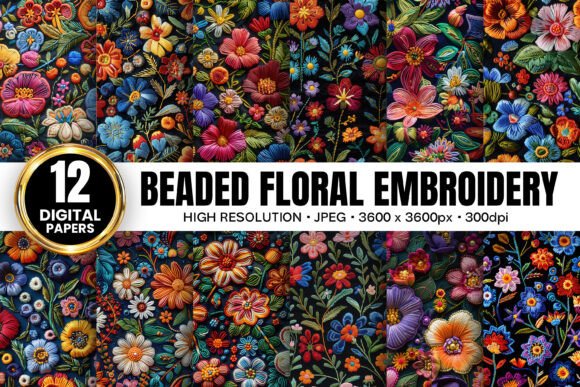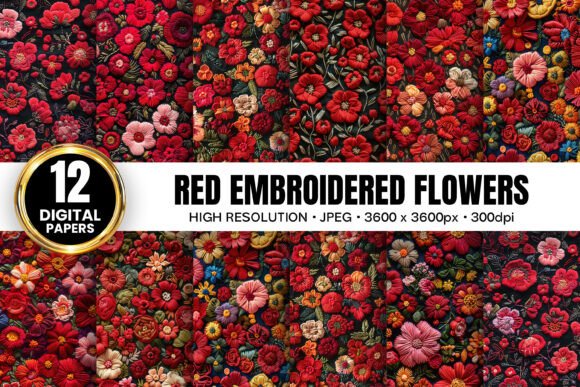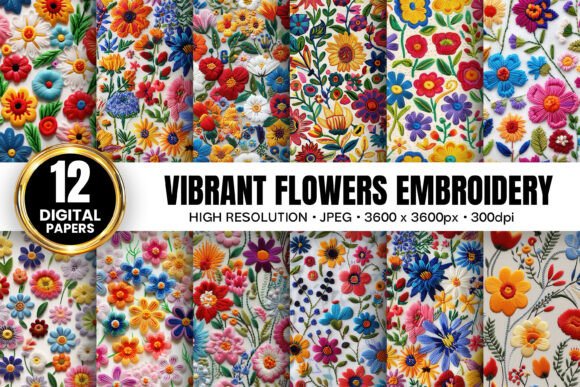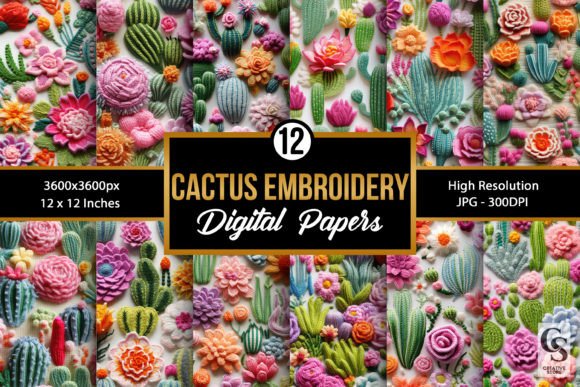
Floral Cactus Embroidery Digital Papers
First Impression: Bold, Playful, and Unexpectedly Refined
As an embroidery designer who’s prepped over 80 craft fair booths—from Portland maker markets to Nashville holiday bazaars—I opened Floral Cactus Embroidery Digital Papers expecting whimsy. What I found was sharper: a confident fusion of desert resilience and botanical softness. It doesn’t lean into cliché cactus kitsch or overly sweet florals. Instead, it reads as modern handmade—bold enough for a market tote, delicate enough for a tea towel hem, and cohesive enough to anchor a boutique’s seasonal collection. That balance is rare. Customers scanning a crowded booth don’t stop for “cute.” They pause for *character*. And this set delivers.
Where It Shines on Real Craft Fair Products
On tote bag designs, the seamless patterns scale beautifully—no awkward repeats or stretched distortion. A full 12″ x 12″ repeat fills a standard canvas tote front without looking busy, especially when centered or used as a subtle all-over background. For apron embroidery, I tested one motif as a chest pocket accent: clean lines held up even at 3.5″ wide, and the floral-cactus interplay gave instant personality without overwhelming the garment’s utility.
Tea towel embroidery is where these patterns truly sing. The high-resolution JPGs translate crisply to printable mockups—and more importantly, to real stitch-outs on linen-cotton blends. The motifs avoid ultra-thin stems or micro-petals, so they survive kitchen towel texture and repeated washing. As embroidered patches, several designs cropped cleanly into 2.75″–3.5″ circles with strong outer contours—ideal for iron-on or sew-on applications on denim jackets or market bags.
For caps, I selected the most open, low-density motifs (avoiding tightly packed blossoms) and ran them on curved foam-backed twill. They retained legibility—no smudging or thread nesting. On fabric pouches and pillow covers, the seamless nature meant no visible seams across corners or zippers. And as handmade gifts? Absolutely. A small embroidered pouch with a single cactus-floral motif feels intentional, giftable, and premium—not mass-produced.
Practical Selling & Production Truths
This isn’t just pretty—it’s sellable. At a glance, Floral Cactus Embroidery Digital Papers communicates its theme instantly. No decoding needed. That matters when a customer has two seconds to decide whether to pick up your product or keep walking.
It works equally well as a **small accent** (e.g., a 1.5″ motif on a cap brim) or a **large focal design** (e.g., full-front embroidery on a market bag). For online listings, the 3600 x 3600 pixel resolution ensures crisp printable mockups and sharp Etsy thumbnails—even zoomed in. And yes, it’s highly repeatable for batch production: 12 coordinated patterns mean you can rotate designs across product types without losing brand cohesion.
Careful-Use Notes Every Designer Should Know
- Dense stitch areas: Some motifs include layered petals or clustered spines—test on your target fabric first. Heavy density + thick fabric = puckering without proper stabilizer.
- Tiny details: Avoid shrinking any motif below 2″ wide. Fine stamens or narrow cactus spines may vanish on textured towels or dark fabrics.
- Curved surfaces: Caps and pouches need motif simplification. Stick to the more open, graphic-friendly patterns—not the most intricate ones—for those applications.
- Fabric texture matters: These patterns shine on smooth cotton, linen, and medium-weight twill. On heavily slubbed or napped fabrics, choose motifs with bolder outlines and less interior detail.
How It Elevates Your Handmade Product Line
Floral Cactus Embroidery Digital Papers lifts perceived value—not through complexity, but through thoughtful contrast. That juxtaposition (spiky + soft, desert + bloom) tells a story customers connect with. In booth displays, it creates visual rhythm: pair a bold cactus-floral tote with neutral-toned aprons and let the pattern be the hero. For Etsy sellers, it adds instant niche appeal—“botanical desert” is underserved and highly searchable.
It strengthens brand consistency across product categories. Use one motif on tea towels, another on patches, and a third scaled large on pillow covers—and they feel like parts of a curated collection, not random add-ons. And crucially, it drives buyer engagement: people ask about it. “Is that a real cactus?” “What kind of flower is that?” That conversation is your opening to share your process, your shop story, and your other handmade products.
Embroidery Designer Notes You Can’t Skip
- Test on scrap fabric—especially your go-to market bag canvas or tea towel blend. Stitch density and thread tension behave differently across fibers.
- Check thread contrast carefully. Light threads on light fabric? Add a subtle underlay or switch to matte poly for definition.
- Review spacing and jump stitches. Seamless patterns sometimes hide tight corners—zoom in on your embroidery software before sending to machine.
- Confirm hoop size compatibility. These are digital papers—not pre-digitized embroidery files—so you’ll need to digitize or adapt them. Know your machine’s max hoop dimensions first.
- Use the right stabilizer: medium cutaway for structured items (totes, caps), tear-away for tea towels and lightweight pouches.
- Create at least one real mockup before fair weekend. See how it photographs in natural light—and how it feels in hand.
- Compare fabric colors side-by-side. A motif that pops on ivory may disappear on oat or sage.
- Confirm commercial licensing before selling finished products. Since these are digital embroidery files marketed for craft use, verify usage rights for resale of physical goods.
Final Thought: A Smart, Scalable Design Asset
Floral Cactus Embroidery Digital Papers isn’t just another set of Patterns—it’s a versatile, mood-driven Graphics toolkit built for real-world making. It meets the quiet demands of the craft fair floor: clarity at arm’s length, charm up close, and production reliability behind the scenes. For Etsy sellers, small shop products, and commercial embroidery studios alike, it’s a low-risk, high-return addition to your design assets. Just remember: great machine embroidery design starts with intention—not just inspiration. Test, refine, and let the cactus bloom where it grows best.