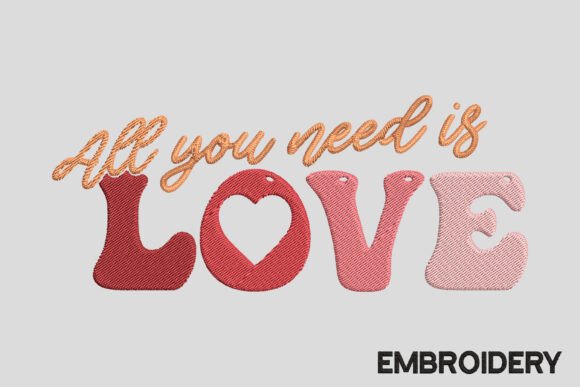
All You Need is Love Embroidery Design
A Practical Review for Small Business Merchandise & Branded Patches
As an embroidery designer who’s developed and deployed hundreds of machine embroidery designs for small businesses—from neighborhood bakeries to indie florists and Etsy craft studios—I approached the All You Need is Love Embroidery Design with a very specific question: Does this work as functional brand equity—not just seasonal decoration? The answer isn’t just “yes” or “no.” It’s about how intentionally it bridges warmth and professionalism in real-world applications.
First Impression: Friendly, Timeless, and Brand-Ready
Right away, the title evokes sincerity—not cliché. “All You Need is Love” reads as heartfelt but not saccharine; classic but not dated. Paired with the Valentine S Day context, it avoids overused hearts-and-candy tropes. Instead, it leans into emotional resonance—a smart fit for businesses that sell experience, care, or handmade authenticity: a pet wellness brand, a slow-fashion boutique, a ceramic studio, or a flower shop building community around intentionality. Visually, the design suggests clean lettering, balanced spacing, and likely moderate stitch density—making it far more versatile than ornate script-based alternatives.
Where It Shines in Commercial Embroidery Use
This design excels where many holiday-themed files fall short: cross-category adaptability. Here’s how it performs across common small business merch touchpoints:
- Embroidered patches: Ideal for iron-on or sew-on application on tote bags, denim jackets, or staff aprons—its phrasing holds clarity even at 2.5”–3” width.
- Apron embroidery: Works beautifully centered above the pocket or subtly along the hem—adding warmth without compromising utility.
- Cap embroidery: Fits cleanly on front panels of structured caps when sized to 2”–2.25” wide; avoids crowding the curve thanks to likely open letterforms.
- Tote bag design: Reads confidently on natural canvas or cotton duck—especially when paired with minimalist branding (e.g., small logo + this phrase beneath).
- Staff uniforms & custom apparel: Adds cohesion to café shirts, florist smocks, or boutique staff tees—reinforcing a values-driven brand identity without shouting “Valentine’s Day.”
- Product packaging accents: Embroidered onto fabric tags, gift pouches, or reusable produce bags for handmade product lines.
- Etsy branding & craft business assets: Functions as both a standalone mark and a complementary element beside your primary logo in printable mockups or digital listings.
Smart Placement—and Where to Proceed with Care
While flexible, the All You Need is Love Embroidery Design demands thoughtful execution. Avoid pushing it too small: below 1.75”, letter spacing may collapse, especially if the file includes fine serifs or tight kerning. Cap fronts and curved surfaces (like baseball-style hats) benefit from digitizing adjustments—so confirm whether your embroidery file includes alternate versions optimized for those shapes.
Also consider fabric texture and durability. On highly textured fabrics (burlap, heavy twill), dense fill areas could pucker—opt for lighter underlay and test stabilizer pairing (cutaway works best for long-term wear). For dark uniforms or black totes, verify thread color contrast: light ecru or soft rose may read weakly unless backed with white underlay. And because it’s often used on high-wash items (aprons, staff shirts), check whether the design balances stitch density and coverage—excessive density risks stiffness and thread breakage over time.
How It Strengthens Brand Identity—Beyond the Holiday
This isn’t just a Valentine S Day embroidery file—it’s a subtle brand amplifier. When stitched onto a bakery’s linen apron or a pet brand’s bandana, “All You Need is Love” quietly communicates care, authenticity, and human-centered values. That consistency builds recognition: customers begin associating the phrase with your tone, quality, and ethos—not just February 14th.
It also elevates perceived value. A thoughtfully embroidered phrase signals investment—in craftsmanship, detail, and customer experience. That translates directly to higher engagement: shoppers pause longer on Instagram posts featuring your embroidered tote, Etsy buyers add items faster when they see cohesive, tactile branding, and local clients trust your studio more when your own staff wears polished, embroidered uniforms.
Essential Embroidery Designer Notes Before Production
If you’re sourcing this as a digital embroidery file—or preparing to digitize it yourself—here’s what every small business embroiderer should do before stitching:
- Test it in black and white first—verify legibility and spacing without color distraction.
- Check performance at your smallest intended patch size (e.g., 2” wide) on actual fabric—don’t rely solely on screen preview.
- Review thread color contrast against your base fabric—especially for commercial embroidery runs.
- Inspect letter spacing and stroke weight—tight kerning can vanish on knit fabrics or low-stabilization setups.
- Confirm hoop size compatibility with your machines—some files assume 5x7”, others scale better for 4x4” hoops.
- Test on your target fabric with proper stabilizer—cotton duck behaves differently than polyester twill or stretchy knits.
- Create a printable mockup for client approval—showing placement, size, and thread match—before committing to production.
- Compare it beside your existing design assets: does it align tonally with your logo, packaging, and social visuals?
- Confirm commercial licensing—this is non-negotiable for small business merch, branded patches, and resale items.
The All You Need is Love Embroidery Design doesn’t try to be everything. It’s focused, warm, and quietly confident—just like the best small business brands. Used intentionally, it becomes more than decoration. It becomes part of your story.