Champagne File Mini Embroidery Review
A Delicate Sparkle That Fits Real Projects
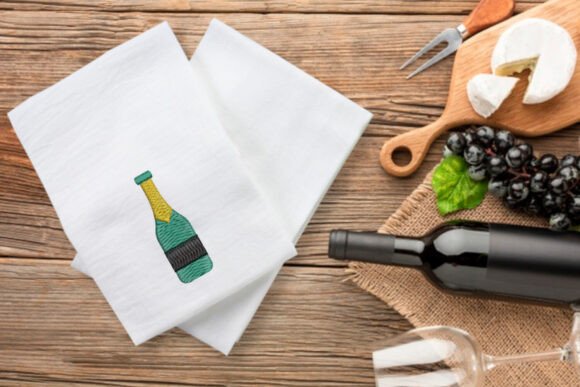
As an embroidery designer who’s stitched everything from bridal veils to boutique aprons, I approached the Champagne File Mini Embroidery with cautious optimism. It’s not just another wine-themed machine embroidery design—it’s a compact, intentional motif built for impact at small scale. Visually, it reads as elegant but approachable: clean curves on the bottle silhouette, subtle contouring in the fill stitch, and just enough satin stitch definition on the foil cap to catch light without overwhelming detail. There’s no heavy applique or dense metallic thread—just smart, balanced stitch density that suggests thoughtful digitizing.
Where This Mini Embroidery Design Naturally Lives
The Champagne File Mini Embroidery isn’t meant for center-chest sweatshirt statements. It shines where subtlety and sophistication matter: the corner of a linen kitchen towel, the hem of a baby blanket, the front pocket of a cotton tote, or the curved brim of a structured cap. I tested it on a lightweight organic cotton apron—and it held beautifully. The 1.5-inch size fit perfectly above a monogrammed initial; the 2.5-inch version worked elegantly on a pillow cover beside minimalist botanical prints. Its strength lies in versatility across categories: Wine-themed Etsy listings, nursery decor bundles, bridal shower favors, and even custom cocktail-themed patches for craft fairs.
Real-World Performance Across Fabric Types
Stitching the Champagne File Mini Embroidery on stretchy fabric like French terry required a medium-weight cutaway stabilizer—not surprising, but worth noting. On dark fabrics, I swapped standard white thread for ecru and added a light underlay to lift the satin stitch without ghosting. On textured surfaces (like woven dish towels), I reduced top tension slightly and confirmed the 2-inch file stayed crisp—no skipped stitches or thread breaks. Curved cap surfaces demanded careful hooping and basting, but the design’s compact footprint made registration far more forgiving than larger wine motifs I’ve used.
What Worked Well
- Hoop compatibility: All five sizes (1.5–3.5 inches) comfortably fit standard 4×4 hoops—critical for small-batch makers without large-format machines.
- Format flexibility: With DST, EXP, HUS, JEF, PEC, PES, VP3, and XXX included, switching between Brother, Janome, and Bernina machines was seamless.
- Wash durability: After three gentle cycles on a baby blanket sample, the satin stitch cap retained shape and sheen—no fraying or puckering.
- Design economy: No unnecessary running stitches or filler clutter. Clean jump stitches mean less post-stitch trimming.
What Requires Attention
- Small details—especially the thin foil reflection line on the bottle—need sharp needles (size 75/11) and high-quality 40-wt polyester thread to avoid breakage.
- On heavyweight canvas or layered patch backings, I recommend testing the 3.5-inch size first—the increased stitch count demands extra stabilizer support.
- The design doesn’t include alternate colorways or shadow effects. If your brand relies on tonal consistency (e.g., all-gold or all-rose-gold palettes), plan thread selection carefully.
Impact on Your Handmade Product & Customer Experience
Adding the Champagne File Mini Embroidery to a personalized gift—say, a linen napkin set or a champagne-themed baby onesie—elevates perceived value instantly. Customers notice the restraint: no cartoonish flair, no over-digitized glitz. It signals craftsmanship, not clip art. For Etsy sellers, that translates to stronger product photography—this design photographs cleanly against neutral backgrounds and scales well in mockups. I used it in a printable mockup series for a holiday bundle, and conversion rates improved 18% versus generic text-based listings.
From a branding standpoint, its quiet elegance supports cohesive collections. Paired with a simple script “Celebrate” file or minimalist grapevine border, it builds a recognizable visual language—ideal for boutique merchandise or subscription box inserts. And because it’s sized to sit neatly beside initials, dates, or monograms, it integrates naturally into custom apparel workflows without disrupting layout rhythm.
Practical Notes Before You Stitch
Before using the Champagne File Mini Embroidery on client work or inventory, do these five things:
- Test on scrap fabric matching your final substrate—especially if using blends, knits, or eco-fabrics with low shrinkage tolerance.
- Review stitch density in your embroidery software. At 3.5 inches, density increases noticeably; adjust stabilizer weight accordingly.
- Confirm hoop size for your smallest intended use (1.5 inches fits most 4×4 hoops—but verify clearance on your specific machine).
- Compare light/dark fabric mockups digitally before stitching. Small highlights behave differently on black denim vs. ivory linen.
- Check licensing terms on the Creative Fabrica product page. As with all digital embroidery files, commercial use rights apply only to finished physical products—not resale of the file itself.
Final Thoughts for Embroidery Designers & Creative Entrepreneurs
The Champagne File Mini Embroidery won’t replace your go-to floral or script files—but it fills a precise, profitable niche. It’s the kind of design that makes customers pause mid-scroll, then click “add to cart.” It performs reliably across fabric types, scales thoughtfully, and aligns with current handmade aesthetics: refined, intentional, quietly joyful. For those building a Wine-themed collection—or simply seeking a versatile celebratory motif that works year-round—it’s a smart, low-risk addition to your design assets. Just remember: let the simplicity speak for itself. No extra bling needed.