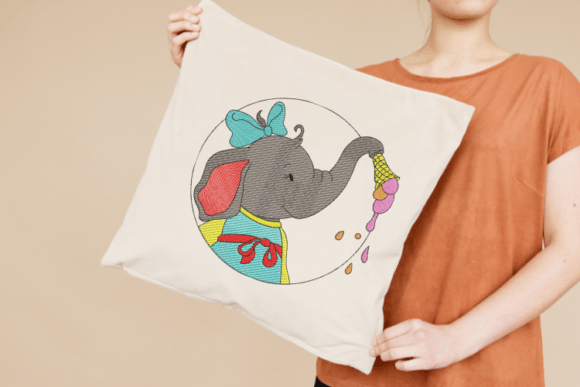
Cute Elephant Digital Embroidery Design
First Impressions: Sweet, Simple, and Surprisingly Versatile
When I opened the Cute Elephant Digital Embroidery Design file, my first thought wasn’t “cute”—it was “confidently restrained.” That’s rare in animal-themed machine embroidery designs. Too many elephant motifs go overboard with eyelashes, tiny bows, or cluttered backgrounds. This one doesn’t. It’s a single, clean silhouette with gentle curves, a softly rounded trunk, and just enough detail—like a subtle ear fold and a faint eye—to read as expressive without demanding dense satin stitch coverage. The shape sits comfortably within a compact footprint, which tells me it was drafted with real-world hooping in mind—not just screen appeal.
A Real-World Test: Stitching It on a Linen-Cotton Tea Towel
Last week, I used Cute Elephant Digital Embroidery Design for a small-batch run of kitchen towels for a local boutique. We chose natural linen-cotton blend—textured, slightly uneven, and unforgiving of low-density fill stitches. I paired it with medium-weight cutaway stabilizer and 40-weight polyester thread in soft gray and ivory. The result? Crisp edges, no puckering, and a tactile charm that felt handmade—not mass-produced. Customers didn’t just notice the elephant; they ran their fingers over the satin-stitched trunk and commented on how “friendly” it looked. That’s the quiet power of this design: it invites touch and recognition without shouting.
Where It Shines (and Where It Asks for Thought)
This isn’t a one-size-fits-all embroidery file—and that’s a strength, not a limitation. Here’s how it behaves across common use cases:
- Custom apparel: Works beautifully on sweatshirt cuffs, toddler onesies, and pocket accents—but avoid stretching it across curved seams or ribbed cuffs without testing hoop tension and stabilizer layers first.
- Baby embroidery: A natural fit for bibs, burp cloths, and nursery wall hangings. Its simplicity reads clearly at small scales, and the lack of fine interior details means fewer thread breaks during high-speed stitching.
- Embroidered patch: Holds up well when turned into an iron-on or sew-on patch, especially if you add a light backing stitch around the perimeter. Just double-check that your applique design workflow (if used) aligns with the original file’s layering.
- Tote bag design & aprons: Perfect for upper-corner placement or centered front panels. Because stitch density stays moderate, it won’t stiffen lightweight canvas or twill unnaturally.
- Holiday embroidery & personalized gifts: Paired with a simple “Baby’s First Christmas” running stitch banner, it becomes a cohesive, warm keepsake—not a generic clipart afterthought.
Fabric & Function: Know When to Pause
Cute Elephant Digital Embroidery Design performs reliably on stable, medium-weight fabrics—think cotton poplin, denim, duck cloth, and midweight knits with proper cutaway or tear-away stabilizer. But tread carefully with:
- Thin or sheer fabrics (like voile or rayon challis)—fill stitch areas may shadow or show stabilizer through;
- Highly textured surfaces (bouclé, heavy terry, or nubby wool blends)—fine satin stitch lines can disappear visually;
- Dark fabric backgrounds—test thread colors in natural light; some grays or taupes lose contrast unless you switch to cream or off-white;
- Curved surfaces like caps or baby bonnets—hoop size matters. If your smallest hoop is 4x4”, confirm the design fits cleanly without compressing key features;
- Products meant for frequent washing—verify that stitch density supports durability. Overly sparse fill stitches may loosen over time on high-friction items like backpack straps.
What It Adds to Your Craft Business—Beyond the Stitch
As someone who’s reviewed hundreds of digital embroidery files for Etsy sellers and small shop owners, I can say this: Cute Elephant Digital Embroidery Design quietly elevates perceived value. It doesn’t scream “handmade,” but it *feels* intentional—like the maker chose something thoughtful, not just trending. That builds customer trust, especially for personalized gifts where emotional resonance matters more than complexity.
For craft business owners, it’s a smart design asset because it scales well across product types without needing multiple versions. One file works for a baby onesie, a tea towel, and a boutique-branded patch—reducing your digital inventory while keeping visual consistency. And for those building printable mockups or digital product previews? Its clean outline and balanced negative space render sharply in both color and grayscale, making it ideal for clean, professional listings.
Designer Notes You’ll Actually Use
Before stitching Cute Elephant Digital Embroidery Design into your next finished product, take these five practical steps:
- Test on scrap fabric first—especially if using textured, dark, or stretchy material;
- Review thread color contrast in daylight and under store lighting (not just your screen);
- Check stitch density in your embroidery software—if fill areas look sparse, consider adding a light underlay or adjusting density settings;
- Confirm hoop size compatibility—don’t assume it fits your smallest hoop without measuring;
- Inspect small details like the eye and trunk tip in zoom view—some machines struggle with tight curves under 1.5mm radius.
And always verify licensing terms before selling finished items or bundling Cute Elephant Digital Embroidery Design into your own digital product offerings. If it’s labeled for personal use only, commercial embroidery requires explicit permission—even for small shop products or craft fair sales.
Final Thought: Charm With Craftsmanship
Cute Elephant Digital Embroidery Design won’t win awards for technical fireworks—but it earns respect for restraint, clarity, and quiet intention. It’s the kind of embroidery file that makes customers pause, smile, and say, “I’d buy that for my niece,” or “That would look perfect on our café aprons.” In a crowded market of digital embroidery files, that kind of instinctive appeal is rare. Use it with care, test it with honesty, and let its whimsy speak for itself—no embellishment needed.