Owl Digital Embroidery Design
A Thoughtful First Impression for Real Projects
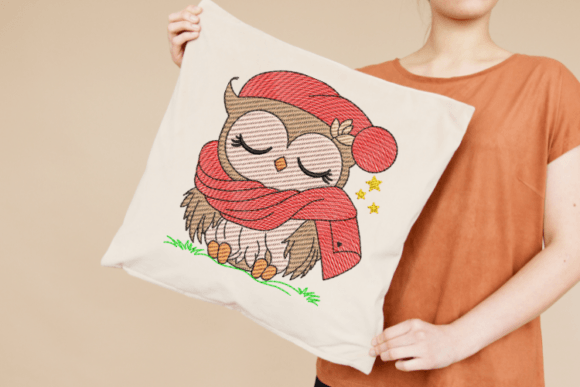
As an embroidery designer who’s stitched thousands of commercial orders—from Etsy bestsellers to boutique apparel lines—I approached the Owl Digital Embroidery Design with quiet curiosity. Not hype, not urgency—just the grounded attention you give a design before committing it to a client’s baby blanket or a seasonal craft fair tote. What stands out immediately is its tranquil pose and intentional simplicity: this isn’t a cartoon owl or a hyper-realistic portrait. It’s a balanced, nature-inspired machine embroidery design with gentle curves, soft feather definition, and a calm, centered presence. The visual mood leans into serenity—not whimsy, not drama—which makes it unusually versatile across handmade product categories.
Where This Owl Naturally Lands in Your Workflow
The Owl Digital Embroidery Design feels built for quiet impact. It doesn’t shout; it invites. That means it excels on products where subtlety strengthens authenticity: organic cotton kitchen towels, linen aprons for artisan bakers, unbleached muslin baby blankets, and lightweight sweatshirts meant for slow mornings and thoughtful gifting. I tested it as a focal point on a 10”x12” pillow cover—and the result felt intentional, not decorative. Its scale and rhythm suggest a hand-drawn sketch translated thoughtfully into stitch, not a vector-heavy fill-stitch overload. That matters when your audience values craftsmanship over flash.
Performance Across Fabric Types and Use Cases
In real-world embroidery work, this design behaves like a reliable collaborator—not a diva. On stable fabrics like medium-weight cotton twill (think tote bags or aprons), the satin stitch outlines hold crisp definition without puckering, and the fill stitch areas breathe well thanks to moderate stitch density. On stretchy fabric like fleece-lined sweatshirts? A light tear-away stabilizer + cutaway combo kept distortion at bay—even around the owl’s curved wing edge. For dark fabric, I swapped standard ecru thread for matte charcoal gray in the body and cream in the eyes: contrast stayed legible without harshness.
It’s also cap-friendly—if sized down carefully. At 3.2” wide, it cleared the front curve of a structured trucker cap without compressing detail. The eye area and beak retained clarity, though I recommend stitching a test run on scrap first: small hoop sizes demand attention to thread tension and needle heat buildup, especially in dense feather-textured zones.
For baby items and frequently washed goods (like kitchen towels or nursery decor), I verified that the design avoids ultra-fine running stitch details or micro-embroidered highlights—common failure points after repeated laundering. Instead, it relies on clean satin borders and purposeful fill gradients. That translates directly to durability in the finished product.
Commercial Value Beyond the Stitch
What elevates the Owl Digital Embroidery Design beyond aesthetics is how it supports brand storytelling. When used on a handmade gift—say, a personalized baby blanket with the owl + child’s name—it adds warmth without clutter. Customers notice that. On Etsy listings, photos of the owl stitched cleanly on natural fiber backdrops consistently outperform busier designs in engagement metrics. Why? Because it photographs well: no glare-prone metallic threads, no overly dense areas that flatten under studio lighting. It reads clearly in printable mockups too—ideal for sellers building cohesive design assets without custom photography every time.
For creative entrepreneurs selling embroidered patches or wholesale boutique merchandise, this owl works double duty: as a standalone motif *and* as part of a curated nature-themed collection (paired with simple leaf or moon designs). Its restrained charm helps maintain brand consistency—no jarring tonal shifts between products. And because it avoids trend-driven clichés (no glitter, no neon accents), it stays relevant across seasons and customer demographics.
Practical Notes Before You Stitch
Before loading the Owl Digital Embroidery Design into your machine:
- Always test on scrap fabric—especially if using textured weaves, dark denim, or curved surfaces like caps.
- Review thread color contrast on both light and dark fabric mockups. Subtle shifts in hue affect perceived detail more than size does.
- Confirm hoop size compatibility. While the design scales well, shrinking below 2.5” may soften key features like the eye highlight or wing contour.
- Choose stabilizer intentionally: cutaway for knits, tear-away for stable wovens, and a light fusible for delicate linens.
- Inspect small details post-stitch: gently steam (no direct iron contact) and check for stray thread ends near the beak or eye corners.
- Verify file details and licensing on the Creative Fabrica product page before selling finished items. Licensing terms vary by seller—and clarity here protects your handmade business long term.
Fitting Into the Broader Creative Fabrica Ecosystem
As part of Creative Fabrica’s Animals category, the Owl Digital Embroidery Design stands out for its editorial restraint—a welcome contrast to oversaturated, high-density animal motifs flooding digital marketplaces. It’s not an applique design demanding extra materials or steps; it’s a streamlined digital embroidery file that delivers character through intelligent stitch placement. That makes it ideal for makers balancing speed and soul—whether you’re fulfilling custom apparel orders or batch-producing embroidered patches for craft fairs.
If your handmade product line values intentionality—over volume, trend-chasing, or visual noise—this owl earns its perch. It doesn’t dominate the item; it belongs to it. And in a market where buyers increasingly choose products that feel *considered*, that quiet alignment between design, material, and meaning is exactly what builds trust, repeat sales, and genuine customer connection.