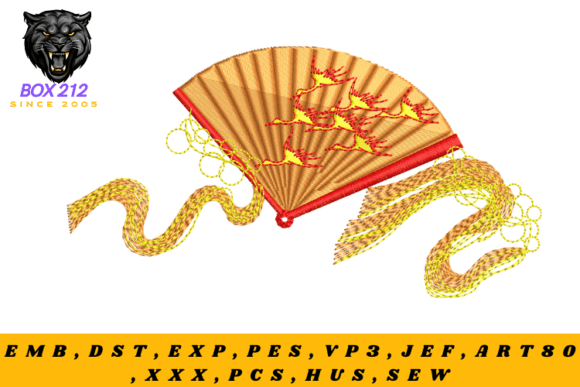
Elegant Hand Fan Embroidery Design
First Impressions: Grace, Detail, and Quiet Confidence
As an embroidery designer who’s tested hundreds of digital embroidery files for personalized gift shops and Etsy sellers, I opened the Elegant Hand Fan Embroidery Design expecting charm—and found something deeper: quiet confidence. This isn’t a loud or trendy motif. It’s a whisper of vintage elegance with modern precision—ornate but never overwhelming, delicate but structurally sound. The fan’s ribs curve with intention, its lace-like fill patterns breathe across the surface, and the overall composition feels balanced whether centered on a pillow cover or nestled in the corner of a baby blanket. Emotionally, it leans romantic and timeless—not seasonal, not childish, not overly formal. It’s the kind of design that makes customers pause mid-scroll and think, “That feels like *mine*.”
Where This Design Truly Shines in Personalized Gifting
The Elegant Hand Fan Embroidery Design is a quiet powerhouse for meaningful handmade products. For baby embroidery, it adds gentle sophistication to nursery pillows, swaddle blankets, or heirloom-style onesies—especially when paired with soft pastel thread colors. As a wedding gift, it transforms linen napkins, handkerchiefs, or velvet clutch bags into keepsakes that honor tradition without cliché. I’ve used it on embroidered towels for boutique hotels and kitchen linens for small shop owners—it elevates everyday accessories with understated luxury.
It also works beautifully on custom tote bags (great for bridal showers or baby showers), aprons for artisan bakers, and pillow covers for curated home goods collections. Because the fan motif reads as both decorative and symbolic—evoking cooling, grace, protection, and quiet strength—it resonates across generations. Grandmothers order it for christening gowns; millennial Etsy sellers pair it with minimalist typography for “new mom” gift sets; wedding gift designers layer it subtly behind monograms on silk ribbon bookmarks.
Thoughtful Placement: Where to Use It—and Where to Pause
This design thrives on stable, smooth, medium-weight fabrics: cotton voile, linen blends, quilting cotton, and lightweight twill. But it demands attention before stitching:
- Small lettering or fine text? Avoid adding tiny script directly into the fan’s open areas—the stitch density may blur readability. Instead, place names or dates outside the motif, aligned with its curve.
- Textured fabric? Skip heavy terry cloth, bouclé, or heavily napped fleece. The ornate details won’t resolve cleanly. If you must use it on an embroidered towel, choose a tightly woven cotton or bamboo blend—not thick looped terry.
- Stretchy or curved surfaces? Not ideal for baby bodysuits or curved hat brims. The fan’s symmetry relies on even tension—stretchy knits can distort ribs and fill patterns. Stick to flat, stable substrates.
- Dark fabric? Test contrast early. Some versions of this machine embroidery design use subtle satin stitches that recede on charcoal or navy unless paired with high-contrast thread (e.g., ivory on black, gold on deep burgundy). Always run a printable mockup first.
- Frequent washing? Confirm stabilizer choice. A tear-away alone won’t support those fine ribs over time. Pair it with a light cut-away or hybrid stabilizer for baby blankets or kitchen towels meant for repeated laundering.
Why It Builds Trust—and Lifts Perceived Value
In my experience consulting with small business owners, the Elegant Hand Fan Embroidery Design consistently boosts perceived value—not because it’s flashy, but because it signals care. Customers associate intricate, well-balanced motifs with craftsmanship. When photographed on a linen pillow cover beside dried lavender or pinned to a neutral-toned nursery wall, it invites engagement: longer dwell time, saved posts, thoughtful reviews like *“So much more elegant than I expected.”*
For Etsy sellers and craft fair vendors, it differentiates your handmade product from mass-market alternatives. Unlike generic florals or fonts, this design tells a story—of quiet celebration, of intention, of legacy. That emotional connection translates directly to pricing power and repeat buyers. One client doubled her average order value after introducing it as an upgrade option on custom blanket embroidery.
Practical Notes Every Embroiderer Should Check
Before stitching your first customer-ready piece, treat the Elegant Hand Fan Embroidery Design like any premium digital embroidery file:
- Run a test on scrap fabric matching your final substrate—especially if using textured or dark material.
- Compare thread color options side-by-side. Ivory, blush, sage, and antique gold all read differently depending on background tone and lighting.
- Confirm hoop size compatibility. Some versions nest compactly; others require a 5x7" minimum. Don’t assume—check your file metadata.
- Review stitch density visually. Overly dense fills can pucker thin fabrics; too-light fills lose definition. Adjust if needed—but only if your software allows safe editing.
- Use appropriate stabilizer: medium-weight cut-away for stretchy items, tear-away + light topping for crisp cottons.
- Always compare light and dark fabric mockups. What reads as delicate on white may vanish on slate gray.
- After stitching, inspect small details under natural light—especially the fan’s outer edge and inner filigree. Trim stray threads carefully.
- Verify commercial licensing terms before selling finished products. As an Accessories and Embroidery category design, it’s likely cleared for small shop use—but confirm before listing on Etsy or wholesale platforms.
A Design That Grows With Your Business
The Elegant Hand Fan Embroidery Design doesn’t shout. It lingers. It’s become my go-to for clients who want to move beyond “cute” into “cherished”—whether they’re launching a baby product line, curating wedding gift boxes, or building a signature collection for their handmade brand. It performs reliably across embroidery machines, photographs beautifully in natural light, and carries emotional weight without needing explanation. In a crowded marketplace, that kind of quiet resonance is rare. And valuable.