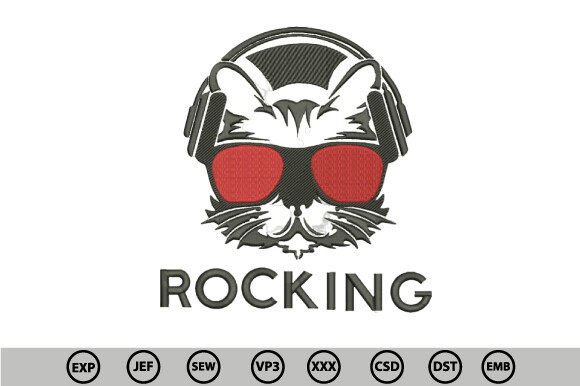
Rocking Cat Embroidery Design
A Playful, Heartfelt Touch for Handmade Gifts
As an embroidery designer who’s stitched thousands of custom pieces—from baby blankets to wedding towel sets—I was instantly drawn to the Rocking Cat Embroidery Design. It’s not just another cat motif. There’s a gentle rhythm in its pose, a quiet charm in its curved tail and tilted head that evokes lullabies, rocking chairs, and cozy moments. It feels sweet without being saccharine, whimsical without sacrificing elegance. The line work balances clean definition with soft, handmade warmth—ideal for projects where emotional resonance matters as much as precision.
Where This Design Truly Shines
The Rocking Cat Embroidery Design is especially well-suited for personalized gifts that carry meaning: a baby’s first blanket, a nursery pillow for new parents, or a custom embroidered towel gifted at a baby shower. Its gentle motion suggests comfort and care—perfect for baby embroidery or keepsakes meant to be held, hugged, and cherished over time.
For Etsy sellers and small shop owners, this design adds instant personality to everyday items. Stitch it on linen pillow covers for a modern nursery, on cotton tote bags for craft fair booths, or on aprons for boutique bakeries—its universal appeal bridges playful and polished. Wedding gift creators will appreciate how it softens formal home decor; imagine it delicately stitched on monogrammed guest towels or a set of embroidered napkins for a rustic-chic reception.
It also works beautifully in seasonal and sentimental contexts: a rocking cat nestled beside “Welcome Home” on a baby gift box, or paired with tiny musical notes (as hinted in its description) for a music-themed nursery or toddler’s first instrument case. As a digital embroidery file, it layers effortlessly into printable mockups—helping Etsy sellers showcase texture, scale, and placement before stitching a single thread.
Practical Considerations for Real-World Stitching
Before sending your Rocking Cat Embroidery Design to the hoop, take a moment to assess fabric texture and project goals. On terry cloth towels, use a medium-weight cutaway stabilizer to prevent puckering around the rocking curve and paws. For stretchy baby onesies or knit blankets, pair tear-away with light iron-on for added control—especially around delicate leg contours and ear tips.
Thread color contrast is key. The design’s gentle silhouette relies on clear definition against background fabric. On dark fabrics, opt for high-contrast threads like bright cream, pale mint, or warm oat—not stark white, which can look clinical. Test stitch-outs are non-negotiable: check how the rocking motion reads at 3x4" scale, confirm small details (like whiskers or paw pads) hold up after stitching, and verify that dense fill areas don’t overwhelm lightweight cottons.
Stitch density matters. While the description doesn’t list exact counts, the visual balance suggests moderate density—enough to read clearly on textured surfaces, but not so heavy that it stiffens a baby blanket or distorts a linen pillow cover. Always review the product details on Creative Fabrica for hoop size recommendations and machine compatibility before production. Licensing terms should also be confirmed—especially if you’re selling finished products commercially.
Why Customers Connect With This Design
In handmade gifting, trust begins with perception—and perception starts with detail. A well-executed Rocking Cat Embroidery Design signals care: the slight tilt of the head, the smooth arc of the back, the intentional spacing between limbs. That craftsmanship translates directly into buyer engagement. Customers notice when a design feels *considered*, not copied. They feel it in the weight of a stitched towel, the softness of a blanket edge, the thoughtful placement on a gift box.
For Etsy sellers, this design elevates product photography. Its organic shape invites natural lighting and lifestyle staging—a rocking cat on a folded muslin swaddle, framed by wooden toys and morning light. That authenticity builds emotional value far beyond the stitch count. It turns a simple pillow cover into a family heirloom-in-waiting, a towel into a memory anchor, a tote bag into a conversation starter.
Smart Stitching Habits for Consistent Results
Here’s what I recommend every time you use the Rocking Cat Embroidery Design:
- Create a test stitch-out on your target fabric—even if it’s scrap. Observe how curves flow and how stabilizer interacts with thread tension.
- Compare thread colors under both daylight and indoor lighting. What reads softly in the studio may vanish in a photo.
- Test on similar fabric—don’t assume cotton poplin behaves like brushed twill or terry cloth.
- Confirm hoop size before digitizing or resizing. Some versions may require a 5x7" hoop minimum for full clarity.
- Review stitch density visually in your embroidery software. If fills appear overly tight or sparse, adjust underlay or density settings conservatively.
- Use proper stabilizer based on fabric weight and drape—not just habit. Lightweight cutaway often outperforms tear-away on knits and terrycloth.
- Check product details and licensing on Creative Fabrica before listing finished items. Commercial use permissions vary by seller and file type.
A Design That Grows With Your Craft
The Rocking Cat Embroidery Design isn’t just versatile—it’s adaptable. Scale it down for a delicate monogram accent on a child’s hair clip, enlarge it for bold wall art on canvas, or combine it with coordinating floral or musical motifs for themed collections. Its timeless posture avoids trend fatigue, making it a reliable staple in your Creative Fabrica embroidery library.
Whether you’re building a small shop product line, preparing for holiday markets, or designing custom keepsakes for friends and family, this machine embroidery design delivers more than visual appeal—it delivers intention. In a world of fast-made goods, the Rocking Cat Embroidery Design reminds us why handmade still moves people: because it holds space for tenderness, rhythm, and quiet joy—one stitch at a time.