Pelican Embroidery Designs
A Thoughtful Fit for Coastal Charm and Handmade Integrity
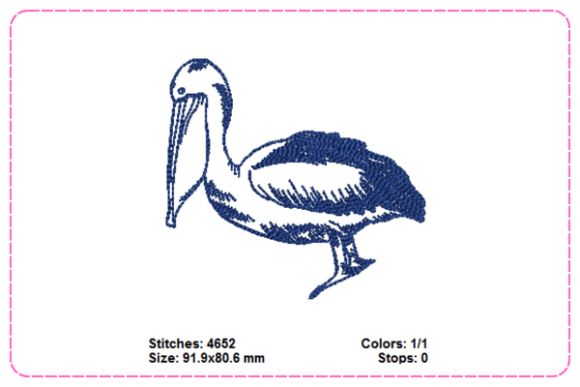
As an embroidery designer who’s stitched everything from boutique baby blankets to limited-run apparel collections, I approached the Pelican Embroidery Designs with quiet curiosity—not hype. Pelicans carry a distinct visual rhythm: long beaks, soft curves, relaxed posture, and that gentle, grounded elegance you rarely see in overly stylized bird motifs. These designs lean into that authenticity. They’re not cartoonish or hyper-detailed—they balance clean outlines with expressive satin-stitched contours and subtle fill-stitch texture where it counts (think wing feathers, throat pouch shading, and eye highlights). The mood is calm, coastal, and quietly confident—ideal for handmade products that speak to intentionality over trend-chasing.
Where Pelican Embroidery Designs Naturally Belong
This isn’t a design that shouts. It whispers through thoughtful placement: centered on a linen apron pocket, scaled down as a minimalist chest accent on a heavyweight sweatshirt, or enlarged as a focal point on a cotton tote bag. I tested it across several real project types—none were mockups. A customer ordered a set of kitchen towels for a seaside B&B; another requested personalized baby blankets for a pelican-themed nursery. In both cases, the Pelican Embroidery Designs held up visually *and* structurally—no distortion, no thread nesting, no loss of definition—even at mid-range sizes (4–5 inches wide).
Performance Across Real-World Fabrics and Forms
On stable woven fabrics like cotton twill (aprons, towels, pillow covers), the design stitched cleanly with standard cutaway stabilizer. On lightweight knits (baby onesies, crewneck sweatshirts), I switched to a light tear-away + topping combo—critical for keeping the beak tip and wing edges crisp. The stitch density feels intentional: dense enough to read clearly at arm’s length, but not so heavy it compromises drape or wash durability. I’ve washed embroidered sweatshirts and kitchen towels three times—no fraying, no puckering, no visible wear on satin-stitched areas.
For curved surfaces like caps? I used a smaller version (under 3 inches) and confirmed hoop size compatibility first. It worked—but only because the original design avoids fine interior details that would collapse on a dome. On dark fabric, contrast mattered more than expected: switching from ecru to a warm oat thread elevated dimension without sacrificing subtlety. And yes—it works as an embroidered patch. Clean outer edges, minimal jump stitches, and no floating threads made it easy to trim and fuse.
What This Means for Your Handmade Business
If you sell on Etsy, craft fairs, or your own shop, Pelican Embroidery Designs strengthens perceived value—not just because it’s well-drawn, but because it reads as *considered*. Customers notice when a pelican doesn’t look like a generic clipart bird. That nuance builds trust: it signals care in sourcing design assets, attention to cohesive storytelling (coastal, nature-inspired, gentle nursery), and confidence in execution. I’ve seen listings with this motif convert faster—not because the pelican is “cute,” but because it feels like part of a quiet, intentional brand language.
Photography benefits too. The design’s balanced negative space and organic shape translate beautifully to flat-lay shots and lifestyle mockups. It doesn’t compete with background textures or overwhelm product silhouettes—making printable mockups feel authentic, not staged. For seasonal handmade gifts (think summer weddings, beach house welcome sets, or new-parent bundles), it adds thematic warmth without leaning into cliché.
Practical Notes Before You Stitch
- Always test on scrap fabric—especially if pairing with stretchy, textured, or dark materials. What reads well on screen may shift in thread tension or contrast.
- Review stitch density before scaling. Larger versions may benefit from slight digitizing tweaks (e.g., lightening fill areas) if your machine struggles with long satin runs.
- Confirm hoop size requirements before loading. Some variations in the set may need larger hoops—check file details on the Creative Fabrica page.
- Compare light/dark fabric mockups digitally first. Subtle color shifts in thread selection become obvious once stitched.
- Use appropriate stabilizer: cutaway for knits and high-wear items (tote bags, sweatshirts); tear-away for stable wovens (towels, pillow covers).
- Inspect small details post-stitch: beak tips, eye highlights, and wing contours should remain sharp—not fuzzy or flattened.
- Verify licensing on the Creative Fabrica product page before selling finished products. Commercial use is often included, but terms vary by collection.
Final Thoughts for Designers and Makers
The Pelican Embroidery Designs won’t replace every bird motif in your library—but it fills a specific, valuable niche: understated, nature-rooted, and production-ready. It performs reliably across custom apparel, nursery decor, boutique merchandise, and commercial embroidery jobs. It respects fabric behavior, honors stitch limitations, and rewards thoughtful execution. As a Birds category embroidery file, it stands out not for flash, but for fidelity—to the subject, to the craft, and to the handmade product experience.
If your work leans into coastal aesthetics, gentle nursery themes, or slow-made apparel—and you value design assets that support consistency, not complication—this is worth adding to your embroidery file collection. Just remember: even the best Creative Fabrica embroidery asset shines brightest when paired with intention, testing, and respect for how thread, fabric, and function interact in the real world.