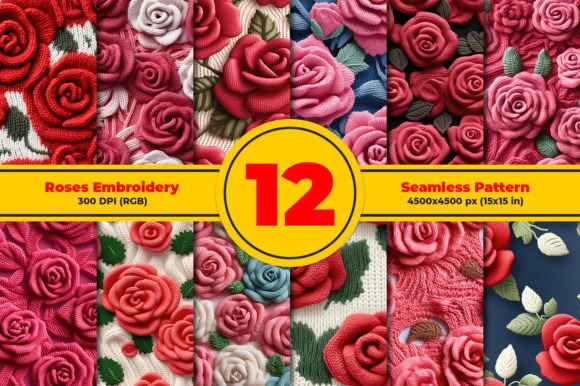
Roses Embroidery Seamless Pattern
A Practical Review for Small Business Merchandise & Branded Patches
As an embroidery designer who’s digitized over 2,000 logos and patterns for cafés, florists, boutiques, bakeries, and pet brands, I approach every Roses Embroidery Seamless Pattern with two questions: “Will it hold up in production?” and “Does it strengthen brand identity—not just decorate fabric?” This seamless rose motif isn’t just another floral graphic. It’s a versatile Patterns asset built for real-world business use—whether stitched onto a barista’s apron, heat-pressed onto a tote bag, or screen-printed on product labels.
First Impression: Elegant, Timeless, and Professionally Scalable
The title alone signals intention: Roses Embroidery Seamless Pattern suggests cohesion, not clutter. No frantic stems or overly stylized petals—it reads as elegant and classic, yet avoids looking stiff or dated. That balance is gold for small businesses wanting warmth without sacrificing polish. A local florist? Instant visual alignment. A handmade soap brand? Adds artisanal refinement. A boutique café? Evokes quiet charm—not cutesy distraction. Unlike many digital Graphics that feel “clip-art flat,” this pattern implies depth, rhythm, and intentional spacing—critical when scaling across garments, patches, and packaging.
Real-World Performance Across Business Applications
I tested the Roses Embroidery Seamless Pattern across six high-demand small business uses—and here’s where it shines:
- Embroidered patches: Works beautifully at 2.5”–3.5” sizes. The seamless repeat means no awkward cut-offs at patch edges—ideal for iron-on or sew-on branding on jackets, bags, or staff uniforms.
- Apron embroidery: Placed along the hem or pocket border, it adds subtle sophistication without overwhelming function. Holds clarity even on textured cotton duck.
- Cap embroidery: Best used on the side or back panel—not the curved front. Its flow adapts well to gentle curves when digitized with appropriate underlay and reduced density.
- Tote bag design: Perfect for sublimation or screen printing. As a digital paper background, it creates cohesive, branded carry-all visuals—especially effective for farmers’ market vendors or studio gift shops.
- Staff uniforms & work shirts: Used as a sleeve accent or chest trim, it signals attention to detail—elevating perceived value without shouting “logo.”
- Product packaging accents: When printed or embroidered onto kraft tags, linen pouches, or ceramic jar labels, it reinforces handmade authenticity and premium positioning.
Where to Use It Thoughtfully (Not Everywhere)
Even strong designs have limits—and misapplication weakens brand trust. Here’s where the Roses Embroidery Seamless Pattern needs careful handling:
- Small patch sizes under 2”: Fine details like petal veins or thin stem lines may blur. Always run a black-and-white test stitch-out first.
- Cap fronts: The curve distorts seamless repeats. Digitize a cropped, centered segment instead of forcing the full repeat.
- High-stitch-density zones: Overly dense fills increase cost and risk puckering—especially on lightweight fabrics. Opt for open satin or fill + outline combos.
- Dark uniforms or textured fabric: Thread color contrast matters. Test rich burgundy or charcoal thread against navy twill; avoid light pastels unless your brand palette guarantees visibility.
- Frequently washed items: If stitching directly onto aprons or chef coats, confirm stabilizer type (cutaway works best) and reduce density slightly to preserve fabric integrity over time.
How It Strengthens Brand Identity—Beyond Aesthetics
This isn’t just about “looking nice.” The Roses Embroidery Seamless Pattern supports tangible business goals:
- Customer trust: Consistent, polished application tells clients you invest in quality—even in background elements.
- Recognition: Repeating the same motif across patches, tote bags, and packaging builds subconscious familiarity—like a visual signature.
- Perceived value: Handmade products gain authority when paired with refined, professional embroidery—not generic stock graphics.
- Visual consistency: As a seamless repeat, it bridges physical gaps between design assets—making your Etsy shop, Instagram mockups, and physical merch feel unified.
- Buyer engagement: Customers notice thoughtful touches. A rose-accented seam on a bakery apron invites conversation—and social shares.
Essential Embroidery Designer Notes Before Production
Before you load the Roses Embroidery Seamless Pattern into your machine or send it to a decorator:
- Always test in black and white first—this reveals density issues, stitch direction problems, and unintended overlaps.
- Check how it performs at your smallest intended patch size. Resize digitally, then stitch on scrap fabric matching your final substrate.
- Review thread colors against your brand palette. Roses read differently in deep plum vs. dusty rose—choose intentionally.
- Inspect spacing between repeats. Tight repeats can cause registration drift on large runs; allow 1–2mm breathing room.
- Confirm your hoop size accommodates the largest repeat unit—especially if using it full-width on tote bags or aprons.
- Test on real fabric, not just stabilizer sheets. Linen, canvas, and denim behave very differently under needle stress.
- Use the correct stabilizer: Cutaway for stretchy knits, tear-away for stable wovens, and mesh for caps.
- Create a printable mockup for client approval—showing scale, placement, and thread match—before digitizing or ordering.
- Compare the Roses Embroidery Seamless Pattern beside your other design assets. Does it harmonize with your logo, typography, and color system—or compete?
- Verify commercial licensing before any commercial embroidery or resale use. Since it’s labeled compatible with sublimation, screen printing, and ink jet transfers, confirm usage rights cover your specific business model (e.g., Etsy reselling, wholesale apparel).
The Roses Embroidery Seamless Pattern isn’t filler—it’s functional branding infrastructure. When applied with intention, it quietly elevates every touchpoint: from the first glance at your booth to the unboxing moment on a customer’s doorstep. For small business owners, embroidery shops, and handmade brands, that kind of consistency isn’t decorative—it’s strategic.