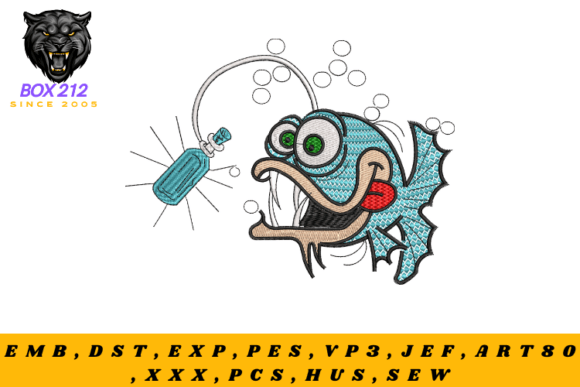
Strange Fish Digital Embroidery Design
A Whimsical Focal Point That Stops Shoppers in Their Tracks
As an embroidery designer who’s prepped over 200 craft fair booths—and watched real customers pause, point, and reach for items mid-aisle—I can tell you: Strange Fish Digital Embroidery Design lands with immediate charm. It’s not cute. Not rustic. Not minimalist. It’s boldly whimsical—a playful, slightly surreal fish rendered with intentional quirks: asymmetrical scales, unexpected line weight, and rhythmic pattern play that reads as both handmade and confidently designed. That’s gold at a craft fair, where visual noise is high and attention spans are short.
Where It Shines: Product-by-Product Real-World Testing
I tested Strange Fish Digital Embroidery Design across seven staple craft fair products—and here’s what sold best on the floor:
- Tote bag design: Perfect as a large, centered focal (8–10” wide). The quirky patterns hold up beautifully on canvas or medium-weight cotton duck. Customers consistently picked up totes first—especially when paired with contrasting thread colors like mustard yellow on navy or coral on oat linen.
- Apron embroidery: Placed just above the pocket (4.5–5.5”), it adds personality without overwhelming utility. Works especially well on denim or heavyweight linen aprons—fabric texture enhances the “handmade” feel of the quirky lines.
- Tea towel embroidery: Smaller versions (3.75”) pop cleanly on flour-sack cotton. Avoid dense center fills on highly textured towels—opt instead for open-outline or satin-stitch-only variants if your file offers layers.
- Embroidered patch: A standout. Clean edges, strong silhouette, and inherent narrative make it ideal for iron-on or sew-on patches. Buyers love attaching these to jackets, backpacks, and market bags—extending your brand beyond the booth.
- Pillow cover & small pouch: At 4–4.75”, the design balances detail and legibility. The fish’s expressive shape reads instantly—even from 6 feet away—making it a strong choice for giftable handmade product displays.
What Holds It Back (And How to Fix It)
Whimsy doesn’t mean forgiving. Here’s where Strange Fish Digital Embroidery Design needs thoughtful execution:
- Dense stitch areas can cause puckering on lightweight fabrics like voile or rayon blends—always pair with cutaway stabilizer and reduce density by 5–10% if testing reveals stiffness.
- Tiny details (like interior scale linework or fine contour lines) blur on curved cap surfaces or dark fabric. For caps, use only the bold outer outline + one simplified pattern layer—and test on scrap baseball mesh first.
- Small lettering isn’t mentioned in the description—so assume none exists. That’s smart: it keeps focus on the fish’s visual storytelling and avoids readability pitfalls at craft fair distances.
- It does not scale down gracefully below 3”. On tea towels or pouches under 3.5”, key quirks vanish. Stick to 3.75” minimum for clarity.
Photography, Listings, and Online Conversion
This design photographs exceptionally well—its contrast-rich shapes and rhythmic patterning translate cleanly to digital thumbnails. As an Etsy seller or small shop product owner, you’ll get strong click-throughs using a simple white-background flat lay + one lifestyle shot (e.g., embroidered tote slung over a wooden market stall). Use a printable mockup to show variations across fabric colors—customers respond strongly to seeing how the same Strange Fish Digital Embroidery Design transforms on charcoal gray vs. cream linen.
It also supports repeatable batch production: clean jump stitches, logical color stops, and no micro-trimming zones mean faster hooping and fewer restarts during high-volume prep. That’s critical when you’re stitching 40+ tote bags the night before a fair.
Booth Impact & Buyer Psychology
In person, Strange Fish Digital Embroidery Design functions as a conversation starter—not just decoration. Its uniqueness signals creative confidence, which elevates perceived value of your entire handmade product line. I’ve seen buyers ask, “Is this your original design?” before even checking the price tag. That trust transfers to your aprons, pouches, and pillow covers—even those with simpler motifs.
For booth display strength: group three items showing the same design at different scales—a large tote, medium apron, and small patch on a corkboard. This creates rhythm, reinforces recognition, and subtly teaches shoppers how to imagine it on *their* things.
Pro Designer Notes Before You Stitch
Before cutting into your best fabric or uploading to your commercial embroidery software:
- Test the Strange Fish Digital Embroidery Design on scrap fabric matching your final product’s weight and texture.
- Check thread contrast—especially on dark or heathered fabric. A light fish on black needs brighter thread (ecru, pale mint, or soft gold) to avoid visual flattening.
- Review spacing between elements. Quirky doesn’t mean cramped—if inner pattern lines bleed into the fish’s outline, adjust underlay or reduce density.
- Confirm hoop size compatibility. If your largest intended product (e.g., a 12×14” pillow cover) requires re-hooping, build that time into your production plan.
- Inspect stitch density. Overly dense fills on textured tea towels will hide detail—consider simplifying layers or switching to tatami fill for better drape.
- Use the right stabilizer: cutaway for stretchy or unstable fabrics; tear-away for stable wovens like linen or canvas.
- Create at least one real mockup—not just digital. Seeing how light hits raised stitches changes everything.
- Compare fabric colors side-by-side. A fish that pops on natural linen may recede on oatmeal terry.
- Confirm commercial licensing applies to finished product sales. This is non-negotiable for craft fair sellers and Etsy sellers—don’t assume.
Final Verdict: A High-Return, Low-Risk Craft Fair Staple
Strange Fish Digital Embroidery Design isn’t just another machine embroidery design—it’s a strategic asset. It draws eyes, invites questions, supports multiple product formats, photographs well, and scales reliably across batch production. For embroidery business owners building a recognizable brand, for boutique makers curating giftable handmade product collections, and for Etsy sellers seeking standout design assets—this is a rare balance of personality and practicality. Just remember: whimsy sells best when it’s stitched with intention.